


Clean Air Isn’t a Luxury — It’s Part of a Healthy Home
The air inside your home circulates constantly through your HVAC system. If that air isn’t properly filtered and treated, it can carry dust, allergens, bacteria, and other airborne particles throughout your living space.
At Prime Comfort Masters, we take indoor air quality seriously. Our approach focuses on proven solutions that protect both your health and your HVAC system.
Breathe Better Air
✳︎
Breathe Better Air ✳︎
Why Indoor Air Quality Matters
Poor indoor air quality can affect:
Comfort and air cleanliness
System performance and longevity
Allergies and respiratory irritation
Dust buildup throughout the home
Improving indoor air quality isn’t about perfection — it’s about creating a cleaner, healthier environment for everyday living.
What Is Dust And What Are We Actually Breathing?
Most people think dust is just dirt.
In reality, dust is a mixture of microscopic particles that constantly circulate through the air in your home and through your HVAC system.
Every time your system runs, it pulls air from your home, conditions it, and sends it back out. That means the air you breathe is the same air being filtered — or not filtered — over and over again.
Common Components of Household Dust
Dust is typically made up of:
Skin cells (humans shed thousands every hour)
Fabric fibers from clothing, carpets, and furniture
Pollen brought in from outside
Pet dander
Dust mites and mite debris
Outdoor particles (soil, pollution, construction dust)
Combustion particles from cooking and heating
Microscopic debris too small to see with the naked eye
Many of these particles are small enough to stay airborne, which means they don’t just settle — they circulate.
The Air You Breathe Is Recycled Air
Inside a home, air doesn’t get replaced constantly with “fresh” outdoor air.
Instead, it is recirculated through the HVAC system.
That means:
The same particles can pass through your system dozens of times per day
If filtration is weak, particles stay airborne
If filtration is overly restrictive, airflow suffers and the system strains
If filtration is designed correctly, particles are captured without hurting airflow
This is why the type of filter you use matters just as much as whether you use one at all.
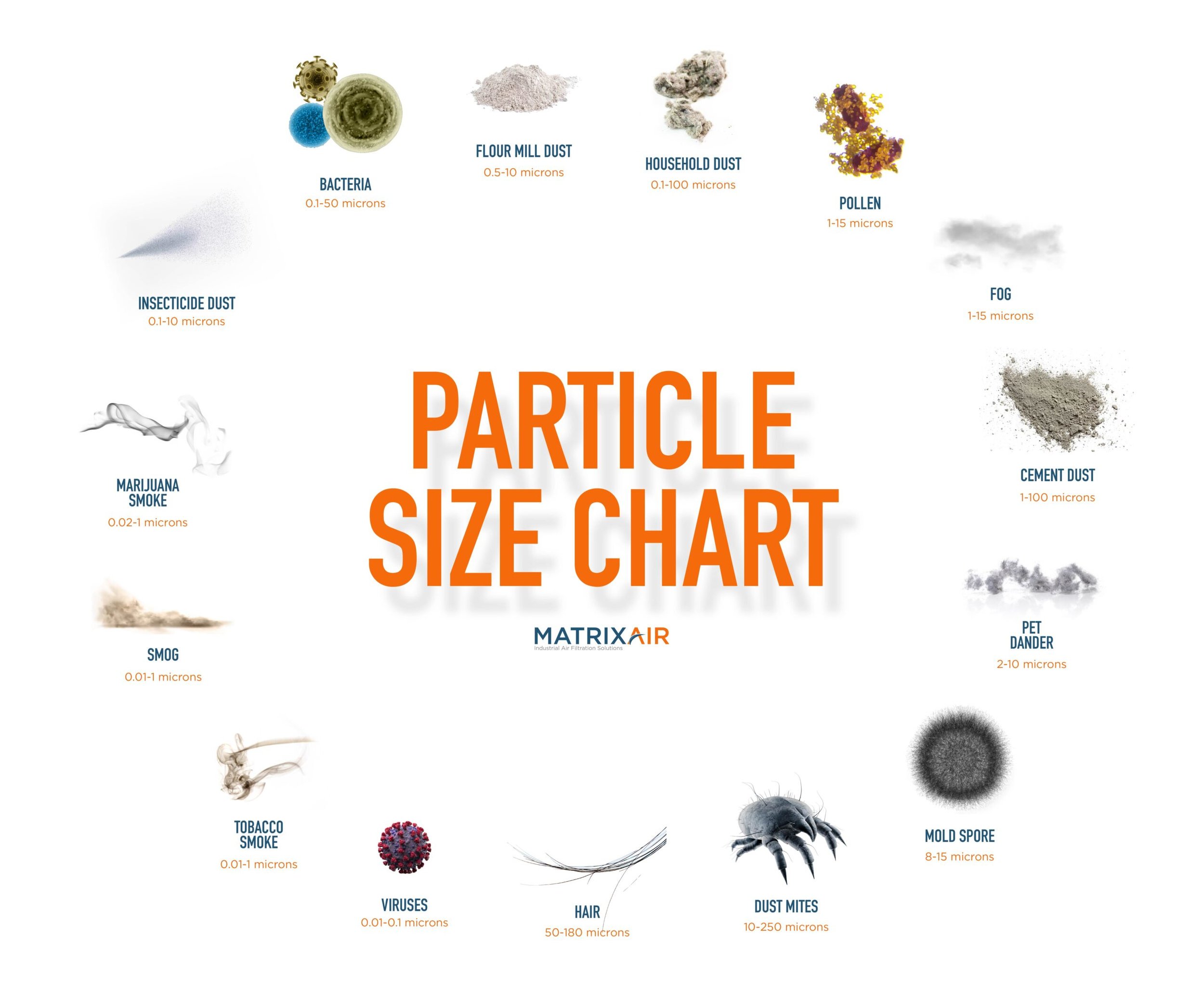
Why Particle Size Matters
Some particles are visible.
Many are not.
The smallest particles — the ones you can’t see — are often the ones that:
Stay suspended in the air longest
Pass through low-quality filters
Travel deeper into the respiratory system
Effective indoor air quality solutions focus on capturing these fine particles without restricting airflow.
Why This Matters for Filtration
Standard disposable filters are designed mainly to:
Protect the equipment
Catch larger debris
They are not designed to effectively capture fine airborne particles.
That’s where polarized media filtration becomes important — it targets the particles that standard filters miss, while still allowing your system to breathe properly.
Why “Cheap” Filters Aren’t the Answer
We understand that not everyone wants to invest in additional filtration and that’s okay. Many homeowners do the best they can with standard cardboard filters, and those filters do serve a basic purpose.
But it’s important to know what they can and can’t do.
Cardboard style filters are designed mainly to catch larger debris, not to fully protect the system or address fine airborne particles. Over time, smaller particles still pass through and settle inside the equipment. When that happens, the HVAC system will eventually need to be cleaned to continue operating properly.
Standard Disposable Filters
Standard 1-inch disposable filters are designed primarily to protect the HVAC equipment from large debris.
They:
Capture larger particles like lint and visible dust
Allow many fine particles to pass through
Need frequent replacement
Can restrict airflow if higher ratings are used & not replaced frequent enough
Are not designed to improve overall air cleanliness
They serve a purpose but they are limited.
Polarized Media Air Filters
Polarized media filters are designed to improve filtration without sacrificing airflow.
They:
Use an electrostatic charge to attract airborne particles
Capture much finer particles than standard filters
Maintain proper airflow through the system
Reduce dust buildup inside the equipment
Require less frequent replacement
Support both air quality and system performance
This approach filters smarter — not tighter.
Indoor Air Quality Consultation
Not Sure What Your Home Needs? Let’s Talk.
Indoor air quality isn’t one-size-fits-all, and it shouldn’t feel confusing or overwhelming. This consultation is simply a chance for us to understand your home, answer your questions, and explain what options if any actually make sense for you.
No pressure. No obligation. Just honest guidance.
What We’ll Look At
Your current HVAC system and filtration
Airflow and dust concerns
How air circulates through your home
Ways to protect your system and improve air quality (if needed)